
Tenant fit-out
Leasehold Improvements in BC
A leasehold improvement is what a tenant pays to build into rented clinic, medical or commercial space. Equipment that leaves with the practice is a different cost. The landlord's base building is a third.
- Building since 2021
- Licensed & fully insured
- 35+ delivered projects
What the tenant pays to build
The usual scope is partitions, ceilings, flooring and millwork. It also includes plumbing rough-in, electrical and the HVAC changes the new use needs. The tenant pays for that work because the tenant needs it. The landlord keeps the shell.
A dental clinic adds lines a plain office does not. Vacuum, compressed air and a dedicated drain have to reach every chair. Those lines are part of the fit-out. They are not sitting in a typical vanilla shell.
A medical exam room is leasehold work of a different weight. It still needs partitions, power and ventilation the last tenant may not have had. It does not need a dental vacuum trunk. The contractor's breakdown should say which is which before anyone prices the job as one number.
Equipment is not the fit-out
Equipment that leaves with the practice is not a leasehold improvement. Dental chairs, sterilizers and furniture the practice owns go with the tenant at the end of the lease. They belong on a separate line of the cost breakdown.
That split is what an accountant uses to classify the spending. The tax write-off is a different subject. It lives in the CCA Class 13 guide. This page does not restate the formula.
Base building, allowance and landlord approval
Base building is what the landlord delivers. It is the structure, the envelope and the services brought to the suite. Tenant work is everything past that line. The difference is written up in the base building guide.
An allowance is the landlord's contribution toward the tenant's work. It is not a construction quote. What it usually covers is in the tenant improvement allowance guide. Whether that money is income is a tax question. The Class 13 article is where that question goes.
The landlord approves the drawings before most building permits are filed. In a strata building the bylaws set the hours for noisy work. Those hours exist because the work is inside someone else's building. A ground-up project on land you own does not have that landlord.
A vanilla shell is the structure and the services brought to the suite. The floor and the ceiling are often unfinished. Interior walls for a clinic are not part of that delivery. Neither is the plumbing that serves a treatment room.
That is why the test-fit happens before the lease is firm. The suite can be the right size and the wrong building. A compressor needs a room that is not a residential ceiling. A vacuum line needs a path the base building did not leave.
Ask what has to come out when you leave. Decide that before it is built. Work the landlord wants removed later is still leasehold work today. Knowing that before you sign is cheaper than finding it on the way out.
Dental and clinic examples
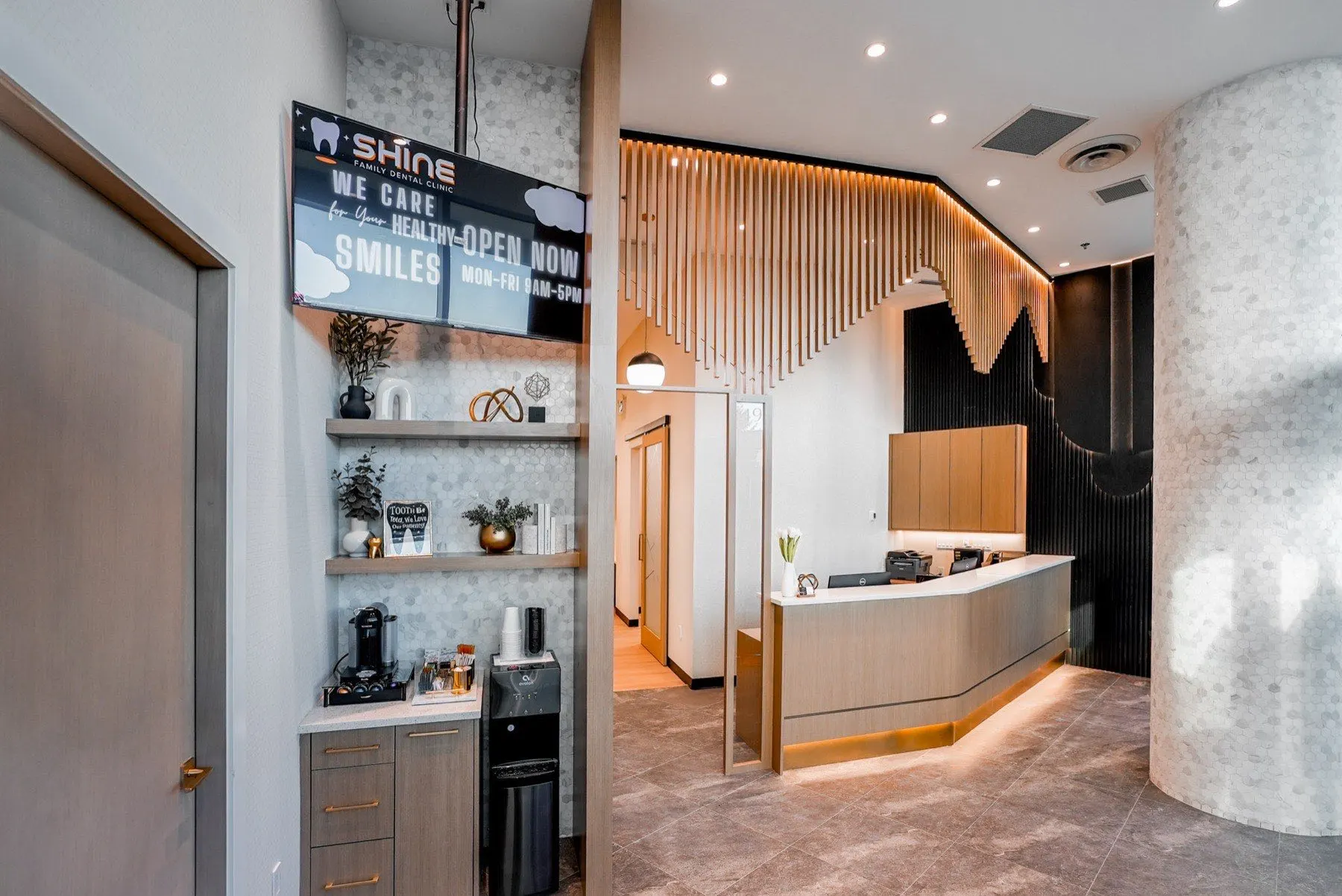
The Shine Dental in White Rock is a delivered dental fit-out. The Marshall Road clinic at 104-33069 Marshall Road in Abbotsford is another. Two clinics are in progress at #B115 and #E100, 8100 272 Street in Langley. Skinholic Aesthetics in Abbotsford is a delivered clinic interior in the same portfolio.
Those are the jobs we can name and locate. A commercial office tenant pays for a shorter list. Partitions and a reception are common. A dental vacuum line is not. That commercial scope is on commercial renovation.
The clinical contract that holds design and construction together is dental clinic design-build. The dental trade scope is dental clinic construction.
Published cost bands
Dental clinic construction in the Lower Mainland is published at $300–$450 per square foot. A commercial renovation is published at $95–$180 per square foot. An office renovation is published at $120–$220 per square foot. None of these bands is a city price. The condition of the shell moves a job inside the band.
Ask for the fit-out and the equipment on separate lines. A single total hides which part stays in the suite and which part leaves with the practice.
Questions
Frequently asked.
What counts as a leasehold improvement in a rented clinic?
Partitions, ceilings, flooring and millwork. Also the plumbing rough-in, the electrical and the HVAC changes the tenant pays for. Equipment that leaves with the practice is not the fit-out.
Is a dental chair a leasehold improvement?
Generally no. A chair the practice owns and can remove at the end of the lease is equipment. The drain, the vacuum line and the air line that stay in the floor are the fit-out.
Where are the tax rules for leasehold improvements?
They are in the CCA Class 13 guide on this site. That article holds the lease-term formula. This page is the construction meaning. It is not tax advice.
What does a leasehold improvement cost in the Lower Mainland?
Dental clinic construction is published at $300–$450 per square foot. A commercial renovation is published at $95–$180 per square foot. An office renovation is published at $120–$220 per square foot. None of these bands is a city price.
Planning a fit-out in leased space?
Bring the lease and the use. We will separate the landlord's base building from the work you pay for before you sign.