
Design & Materials9 min read
Best Flooring for Medical & Dental Clinics: Compliance and Durability Compared
The best flooring for medical and dental clinics is not one product — it is the right product in each zone. Clinical areas need seamless, chemically cleanable surfaces that satisfy infection-control review; waiting areas need durability and warmth; sterilization and lab spaces need floors that shrug off disinfectants and rolling loads. Specify one product everywhere and you either overpay in the lobby or fail inspection in the procedure room. This guide compares the flooring types that belong in a clinic, zone by zone, and flags the installation details that decide whether the floor is still performing in year ten.
Key takeaway. Use homogeneous sheet vinyl with heat-welded seams and an integral coved base in exam, procedure and sterilization areas — it is the specification that clears infection-control review under CSA Z8000 principles. Step down to LVT or rubber in reception, corridors and admin zones, keep porcelain tile to washrooms, and reserve carpet tile for enclosed offices. Subfloor preparation and seam detailing matter more to the floor's lifespan than the product brochure does.
Why Clinic Flooring Is a Compliance Decision First
An office floor is chosen on looks, cost and wear. A clinic floor is chosen on those plus a fourth test: can it be cleaned to a clinical standard, repeatedly, without degrading? CSA Z8000 — the Canadian standard for health care facility design that we cover in our CSA Z8000 compliance checklist — pushes clinical finishes toward surfaces that are smooth, non-absorbent, seamless where possible, and tolerant of hospital-grade disinfectants. That is why the flooring conversation in a clinic build starts with seams: every joint is a place soil and liquid can sit, so the clinical zones use products whose joints can be welded shut.
The second difference is the floor-wall junction. Clinical and sterilization areas use an integral coved base — the sheet flooring turned up the wall — so cleaning reaches every surface without a crevice at the perimeter. It reads as a small detail on a drawing and is one of the first things a health-authority reviewer looks for on a walkthrough.
Clinic Flooring Types Compared
| Flooring type | Infection control | Durability | Comfort & acoustics | Where it belongs |
|---|---|---|---|---|
| Homogeneous sheet vinyl (welded seams) | Excellent — seamless, chemically cleanable | High | Moderate | Exam, procedure, sterilization, operatories |
| Luxury vinyl tile (LVT) | Moderate — joints are unsealed | High | Good | Reception, waiting, corridors, admin |
| Rubber | Good | Very high | Excellent — quiet, low-fatigue | Corridors, labs, staff areas |
| Porcelain tile | Good surface, weak at grout lines | Very high | Poor — hard, loud | Washrooms, entries |
| Carpet tile | Poor | Moderate | Excellent | Enclosed offices, consult rooms only |
| Resinous / epoxy | Excellent — fully seamless | Very high | Poor | Mechanical rooms, some labs and kennel-type uses |
Two patterns fall out of the table. First, no single product wins every column, which is why a well-specified clinic uses three or four flooring types with clean transitions between them. Second, the products that clean best are rarely the ones that feel best underfoot — so the plan should put washdown surfaces where clinical work happens and softer, quieter surfaces where patients wait and staff spend their days.
Zone by Zone: What We Specify and Why
- Exam and procedure rooms. Welded sheet vinyl, coved base. If a room will ever host minor procedures, build it to that standard now — converting an LVT room later means emptying and closing it.
- Sterilization and reprocessing. Welded sheet vinyl with coving is non-negotiable here; this is the room infection-control review examines hardest.
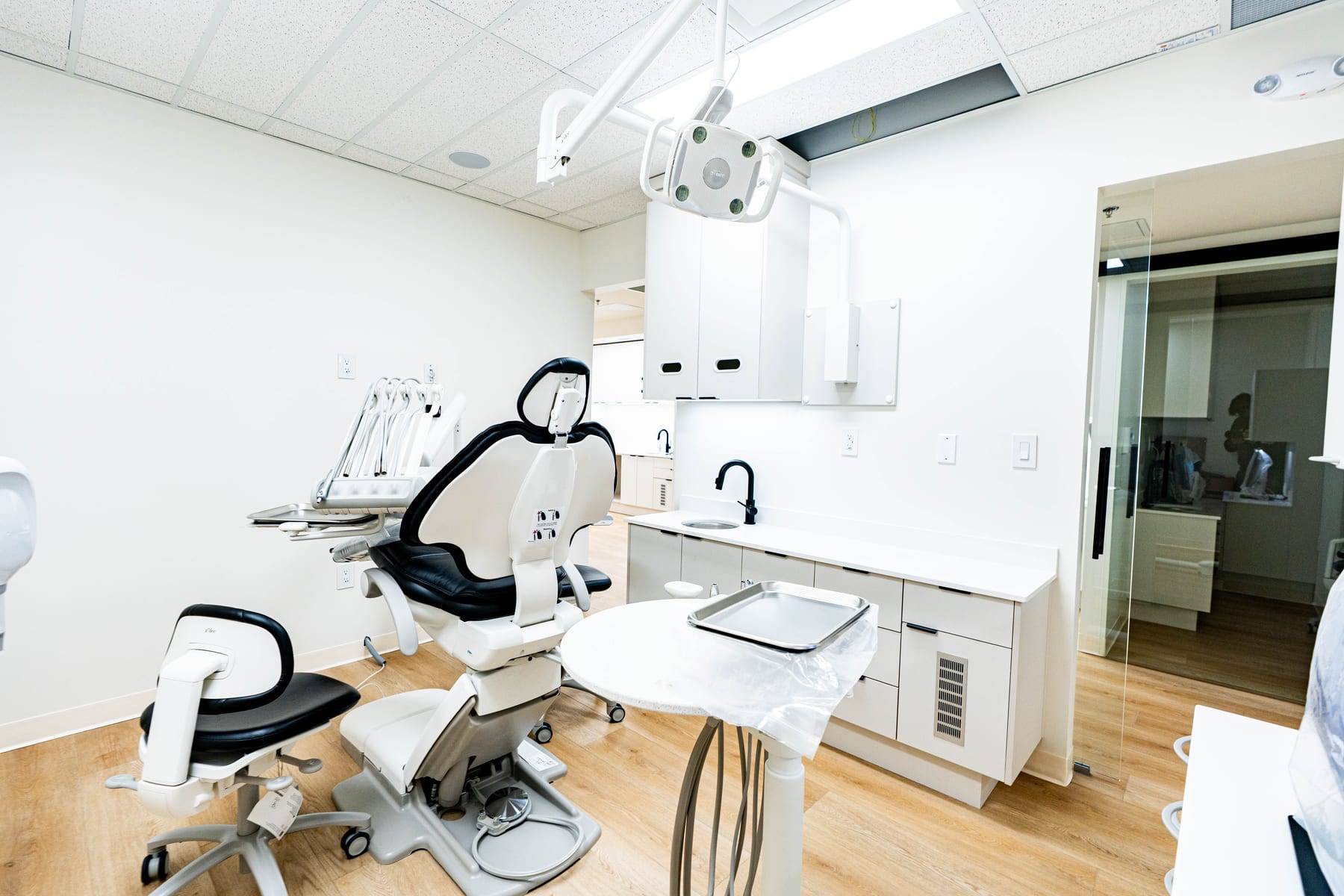
- Dental operatories. Sheet vinyl again, sequenced around the chair's plumbing and power rough-ins. Our dental clinic construction pages cover how much of an operatory's cost lives under the floor.
- Reception and waiting. LVT or rubber. This is the zone where flooring carries the brand — wood-look LVT is the most common choice in the clinics we build because it reads warm without giving up durability.
- Corridors. LVT or rubber; rubber wins where cart traffic and acoustics matter.
- Washrooms. Porcelain tile with appropriate slip ratings, or sheet vinyl carried in from the corridor in smaller clinics — one less transition and one less trade.
- Admin and offices. Carpet tile is fine here, and it is the only zone where it is.
The Installation Details That Decide Lifespan
A clinic floor fails at its weakest detail, not its data sheet. Four details do most of the deciding:
- Slab moisture testing. Adhesives fail over concrete that is still releasing moisture. Testing before installation is cheap; a delaminating floor in an operating clinic is not.
- Levelling and preparation. Sheet vinyl telegraphs every ridge and screw head. Budget for grinding and levelling compound rather than hoping the slab is flat.
- Seam welding and coving workmanship. The specification only performs if the welds are continuous and the coving is tight. This is skilled work — ask who is actually installing it.
- Transitions and accessibility. Every change of product is a threshold; keep them flush and minimal so carts, wheelchairs and walkers move without a bump.
How Flooring Fits the Budget
Flooring is a modest share of a clinic build — the mechanical, electrical and millwork scopes are the numbers that move a budget, which is why healthcare construction runs $150–$320 per sq ft turnkey while flooring choices move the total by only a few dollars of that. The practical advice is the opposite of value-engineering instinct: do not cheapen the clinical flooring, because it is a small line with a large failure cost. If the budget needs relief, take it from the admin zones, where a product swap has no compliance consequence.
Conclusion
The best flooring for medical and dental clinics is a zoned answer: welded sheet vinyl with a coved base where clinical work and cleaning happen, LVT or rubber where patients wait and staff walk, tile in the washrooms, and carpet only behind office doors. Specify by zone, spend the attention on subfloor preparation and seam workmanship rather than on the product brochure, and the floor will still be doing its job when the lease renews. If you are planning a clinic build or renovation in the Lower Mainland, we are glad to walk the space and map the flooring zones before drawings are priced.
Frequently asked questions
What is the best flooring for a medical clinic?
For clinical areas — exam rooms, procedure rooms, sterilization — homogeneous sheet vinyl with heat-welded seams and an integral coved base is the default, because it is seamless, chemically cleanable and meets the infection-control expectations CSA Z8000 sets for clinical surfaces. Reception and corridors can step down to luxury vinyl tile or rubber, where appearance and acoustics matter more than washdown cleaning.
Can you use luxury vinyl tile (LVT) in exam rooms?
It is installed in exam rooms, but it is a compromise. LVT joints are not sealed, so liquid can migrate into them, which is why infection-control-driven layouts keep LVT to waiting areas, corridors and admin space and use welded sheet flooring where the clinical work happens. If an exam room hosts procedures or regular disinfectant cleaning, sheet vinyl is the safer specification.
Why do clinic floors need a coved base?
An integral coved base carries the sheet flooring up the wall in one continuous piece, so there is no 90-degree seam at the floor-wall junction for liquid and soil to collect in. It is one of the clearest visible differences between a clinical fit-out and an office fit-out, and inspectors and health-authority reviewers look for it in procedure and sterilization areas.
What flooring does a dental operatory need?
Sheet vinyl with welded seams is standard in operatories, for the same infection-control reasons as medical procedure rooms, with one addition: the floor has to tolerate point loads and movement from the chair, delivery unit and stools, and the slab below it is full of plumbing rough-ins. Flooring in an operatory is installed late and around services, which is a sequencing question as much as a product question.
Does clinic flooring need slip resistance?
Yes, especially at entries, washrooms and any wet or frequently cleaned area. Slip resistance is rated by the manufacturer and has to be balanced against cleanability — heavily textured surfaces grip better but hold soil. The usual answer is a smooth, cleanable sheet product in clinical zones and higher slip-rated products at entries and washrooms.
How important is subfloor preparation for clinic flooring?
It decides whether the floor lasts. Sheet vinyl telegraphs every defect in the slab beneath it, and adhesives fail over concrete that is still releasing moisture, so a proper installation includes moisture testing of the slab, grinding or levelling, and manufacturer-approved primers and adhesives. Most flooring failures we are asked to repair trace back to preparation, not product.
The service this article is about
Healthcare projects managed around compliance, equipment, service locations, patient flow, and operational readiness.
Healthcare Construction →Related reading
Planning a build like this?
Before you commit to a space, drawings, a budget, or a construction timeline, book a consultation and we will tell you what has to be planned before construction starts.